

How Virtual Staging Can Influence Buyer Interest and First Impressions
Imagine you are searching for a new home online. You open one listing and see an empty living room with bare walls, dull lighting, and no clear sense of how the space could be used.
You move to the next listing.
This time, you see a welcoming living room with a properly sized sofa, a stylish coffee table, warm lighting, and an attractive layout. You can almost imagine sitting there with your family.
Which property makes you want to learn more?
The home itself may be similar, but the presentation creates a different experience. This is where virtual staging can influence buyer interest and first impressions.
Virtual staging uses digital furniture and décor to improve real estate photographs. It can help buyers understand room size, imagine possible lifestyles, and recognize the potential of an empty or outdated space.
However, virtual staging is not magic. It cannot replace accurate pricing, property condition, or professional marketing. Instead, think of it as a visual bridge between what buyers see in a photograph and what they can imagine experiencing in the home.
Let’s explore how you can use virtual staging to make your real estate listings more engaging, realistic, and memorable.
How Buyers Form First Impressions of a Property
Your listing photos often introduce buyers to a property before they ever visit it. Those images can influence whether they continue exploring, share the listing, or schedule a showing.
Buyers Often See Your Listing Before They See the Home
Many buyers begin their property search by browsing online photographs. Before they read every detail in your listing description, they may look at the living room, kitchen, bedrooms, and exterior.
If the images are dark, poorly composed, or visually confusing, buyers may lose interest quickly.
You have only one opportunity to make the first impression, so your photographs should communicate the property’s strengths as clearly as possible.
This does not mean every image needs to look luxurious. It means every image should be clean, accurate, and purposeful.
Visual Details Can Shape Buyer Expectations
Consider two photographs of the same bedroom.
The first shows an empty room with a bare light fixture and no furniture. The second shows a realistic bed, two nightstands, simple artwork, and a comfortable amount of open space.
The staged photograph may help buyers understand:
-
Where the bed could fit
-
How much walking space remains
-
Which wall might accommodate furniture
-
Whether the room feels suitable for a particular lifestyle
The image does not change the actual dimensions of the bedroom. It simply gives buyers a more understandable visual reference.
A First Impression Is Not a Purchase Decision
An attractive photograph may encourage a buyer to investigate a property, but it does not guarantee an offer.
Buyers also consider:
-
Asking price
-
Neighborhood
-
Property condition
-
Floor plan
-
Schools and transportation
-
Monthly costs
-
Market conditions
Virtual staging should support these factors rather than distract from them.
What Is Virtual Staging and How Does It Work?
Virtual staging involves adding digital furniture, decorations, and other interior elements to an existing property photograph.
For example, you might upload a photograph of an empty living room and select a contemporary design. A virtual staging tool can add a sofa, rug, coffee table, artwork, plants, and other suitable décor.
The result should look like a realistic version of the original room.
Adding Digital Furniture to Real Property Photos
Virtual staging can be used to present different design possibilities, including:
-
Modern
-
Contemporary
-
Scandinavian
-
Traditional
-
Minimalist
-
Transitional
-
Coastal
You can select a style based on the property’s architecture, location, price range, and likely buyer audience.
A small condominium, for example, may benefit from simple furniture with clean lines. A large traditional home may suit more classic furnishings.
Preserving the Original Architecture and Layout
Accuracy is essential.
A professional virtual staging image should preserve the original structure, including:
-
Doors and windows
-
Walls and room dimensions
-
Staircases
-
Kitchen cabinets
-
Flooring
-
Walkways
-
Architectural openings
You should never move a door, enlarge a window, remove a wall, or change the floor plan simply to make the image look more attractive.
Buyers should be able to compare the staged image with the actual property without being misled.
Choosing a Design Style That Fits the Property
The furniture should complement the home rather than compete with it.
For instance, a 1950s home with traditional architectural details may look more believable with transitional furniture than with an ultra-modern interior that ignores the building’s character.
The best virtual staging usually feels intentional, restrained, and connected to the property.
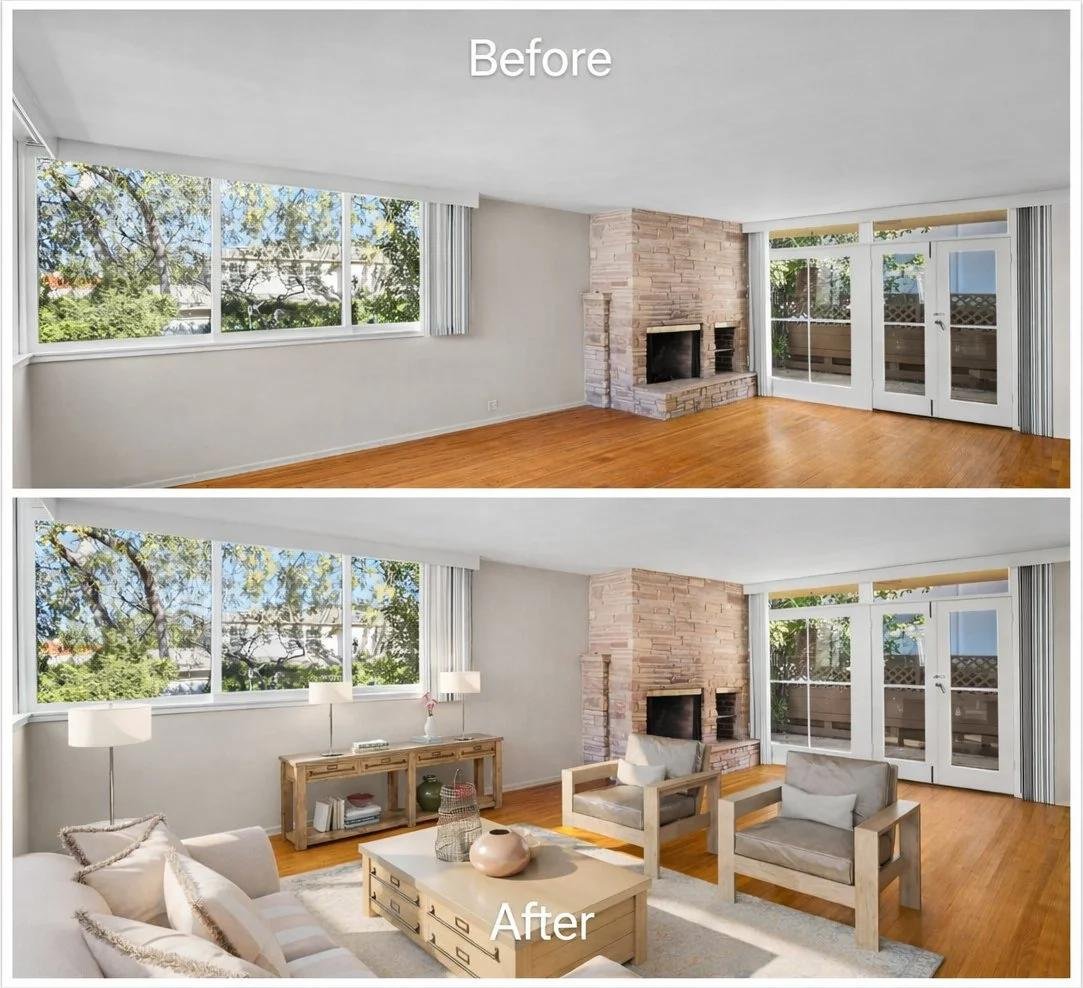
How Virtual Staging Influences Buyer Interest
Virtual staging can influence buyer interest by making property photographs easier to understand and more visually engaging.
It does not force buyers to like a home. Instead, it can help remove some of the uncertainty that comes with viewing empty or poorly presented rooms.
More Engaging Images Can Encourage Further Browsing
Online buyers often compare several listings in a short period of time.
A photograph that clearly shows a room’s purpose may encourage a buyer to look at additional photos, read the property description, or explore the listing in greater detail.
For example, a vacant basement may appear uninviting in an empty photograph. A realistic staged version could show the space as a family room with a sectional sofa, television, storage, and a small play area.
The buyer can now understand one possible use of the space.
That does not mean every buyer will want the same design. It simply gives them a useful starting point.
Staging Can Help Buyers Understand an Empty Room
Furniture acts as a visual measuring tool.
Imagine a living room measuring approximately 12 feet by 15 feet. Without furniture, buyers may struggle to understand whether the room can accommodate a sofa, chairs, and a coffee table.
A properly staged image can demonstrate one practical arrangement.
The key is proportion. If the furniture is too large, the room may appear cramped. If it is too small, the room may look strangely oversized.
Stronger Visual Presentation May Encourage Showing Requests
When buyers understand a room more easily, they may feel more confident about taking the next step.
That step could be:
-
Saving the listing
-
Requesting additional information
-
Contacting the realtor
-
Booking a private showing
-
Attending an open house
Virtual staging cannot guarantee these actions. Still, it can strengthen the visual part of your marketing strategy.
The Emotional Impact of Virtual Staging
Real estate decisions involve practical considerations, but buyers also imagine how a home might fit their lives.
A photograph can help create that connection when it presents the space in a believable way.
Helping Buyers Imagine Their Future Lifestyle
A furnished room can suggest how someone might use the property.
A staged living room may show a place for relaxing after work. A dining room may suggest family meals or entertaining guests. A home office may demonstrate how a buyer could work remotely.
You are not telling buyers how they must live. You are showing them a possible arrangement.
Think of virtual staging as providing the first sketch of a picture. Buyers can then adapt that picture to their own preferences.
Creating a Sense of Comfort and Possibility
An empty room presents facts: walls, windows, floors, and dimensions.
A staged room adds context.
A neutral sofa, a soft rug, and a few carefully selected accessories can make the space easier to imagine. The design should create a welcoming feeling without overwhelming the room.
Simple details often work better than excessive decoration.
Avoiding Unrealistic Emotional Presentation
Do not turn every room into a luxury hotel suite.
If the furniture looks expensive, oversized, or unrelated to the property, buyers may feel that the image is misleading. An unrealistic presentation can weaken trust instead of building interest.
Your objective is not to create a fantasy home. Your objective is to help buyers visualize the real home more clearly.
How Virtual Staging Helps Buyers Understand Room Function
An empty room does not always communicate its purpose. Virtual staging can help explain how a space might work.
Demonstrating Different Room Purposes
A spare room could become:
-
A guest bedroom
-
A home office
-
A study
-
A nursery
-
A hobby room
Choose one primary purpose for each staged image. If you try to show a bedroom, office, gym, and playroom in one design, the result may look crowded and confusing.
You can create alternative versions when they add genuine value.
Showing Furniture Scale and Walking Space
Furniture should fit the room’s actual dimensions.
For example, in a room approximately 10 feet wide, a large sectional may block the main walkway. A smaller sofa and two chairs might communicate the space more effectively.
Pay close attention to:
-
Door clearance
-
Window access
-
Walking paths
-
Furniture spacing
-
Room proportions
-
Sightlines from the camera
A realistic arrangement helps buyers understand how the room might function in everyday life.
Highlighting the Property’s Best Features
Virtual staging should support important architectural details rather than hide them.
You can use furniture placement to draw attention to:
-
Large windows
-
Fireplaces
-
High ceilings
-
Built-in shelving
-
Open-concept layouts
-
Natural light
Avoid placing furniture in front of features that buyers need to see.

Virtual Staging: Building Buyer Interest Without Losing Trust
A strong first impression means little if the image does not accurately represent the property.
Why Realistic Images Matter
Poor virtual staging can create obvious problems, such as:
-
Distorted furniture
-
Incorrect shadows
-
Floating objects
-
Unnatural perspectives
-
Furniture blocking doors
-
Inconsistent room dimensions
Before publishing an image, zoom in and inspect the details. Does the furniture sit naturally on the floor? Do shadows match the lighting? Are the proportions believable?
Small errors can make an otherwise attractive image look artificial.
Clearly Identifying Virtually Staged Photos
You should identify digitally staged images appropriately and follow applicable real estate regulations, platform requirements, and professional standards.
Buyers should understand that the furniture and décor shown may not physically exist in the property.
Transparency is not a weakness. It helps establish credibility.
Showing Original and Staged Images Together
Consider presenting the original and virtually staged images side by side.
This approach allows buyers to see:
-
The property’s actual condition
-
The possible furniture arrangement
-
The design concept
-
The architectural features that remain unchanged
The staged image shows potential. The original image provides context.
Which Properties Can Benefit From Virtual Staging?
Virtual staging can be useful in several real estate situations.
Vacant Houses
Empty homes can be difficult for some buyers to visualize. Virtual furniture can demonstrate room scale and possible uses without the cost and logistics of physical staging.
New Construction and Model Homes
Builders can use virtual staging to show how unfinished or newly completed spaces might look when furnished.
This can be especially useful when buyers are reviewing floor plans or considering a property before the final finishing work is complete.
Condos and Smaller Properties
Carefully selected furniture can show how a smaller room may function without making it appear overcrowded.
Use compact furnishings and leave clear walking paths.
Investment Properties and Fixer-Uppers
Virtual staging can illustrate design potential in a property that needs updates. However, you should not use digital décor to conceal serious defects, unfinished repairs, or poor conditions.
The current property should remain accurately represented.
How Realtors Can Use Virtual Staging in Their Marketing
Real Estate Listing Websites
Use virtually staged images to support your primary listing photographs. Include accurate descriptions and make sure the images comply with the listing platform’s rules.
Consider keeping a balance between staged images and original photographs.
Social Media Marketing
Virtual staging can support engaging content such as:
-
Before-and-after image posts
-
Room transformation carousels
-
Short design videos
-
Virtual staging tutorials
-
Style comparisons
For example, you could show the same living room in contemporary, Scandinavian, and traditional styles. Make sure the purpose is clear and avoid overwhelming your audience with too many variations.
Email Campaigns and Digital Advertising
Staged images can be used in property announcements, buyer newsletters, and targeted advertising campaigns.
However, choose images that accurately represent the property and match the message of the advertisement.
Video Marketing and Virtual Tours
You can incorporate staged images into short promotional videos or property showcase content.
If you create a video using digitally staged rooms, clearly distinguish the concept from the actual furnished condition of the property.
Common Mistakes That Can Reduce Buyer Interest
Using Incorrect Furniture Proportions
Oversized furniture can make a room look cramped. Tiny furniture can make the room appear strangely large.
Always prioritize realistic scale.
Choosing a Design That Conflicts With the Property
A design should suit the home’s architecture and target market. Avoid selecting a style simply because it looks impressive in a sample image.
Overdecorating the Room
Too much furniture or decoration can distract from the property’s best features.
Start with essential furnishings and add accessories sparingly.
Changing Architectural Features
Never move walls, doors, windows, stairs, or built-in features to improve an image. Such changes can mislead buyers and create problems during viewings.
Making the Property Look Better Than It Really Is
Virtual staging should improve presentation, not hide defects.
If a wall has damage or the flooring requires replacement, communicate that information honestly.
Seven Actionable Tips for Creating Stronger First Impressions
1. Start With High-Quality Photography
Use sharp photographs with balanced lighting and straight vertical lines. The better your original image, the more realistic your staged result can be.
2. Stage the Most Important Rooms First
If your budget is limited, begin with the living room and primary bedroom. Add other rooms based on the property’s layout and marketing goals.
3. Match the Design to the Target Buyer
Select furnishings that suit the property’s architecture, price range, and likely audience. Use a consistent style throughout the listing.
4. Use Realistic Furniture Proportions
Whenever possible, use room measurements. Check that the furniture leaves enough room for movement and does not block important features.
5. Preserve the Original Architecture
Compare the staged image with the original photograph. Confirm that all doors, windows, walls, stairs, and built-in elements remain accurate.
6. Keep Styling Consistent Across the Listing
A modern living room paired with an unrelated ornate bedroom may make the listing feel disjointed.
Use complementary colors, materials, and design choices.
7. Track Meaningful Marketing Results
Monitor practical metrics, including:
-
Listing views
-
Click-through rates
-
Inquiry volume
-
Showing requests
-
Time spent on listing pages
These measurements can help you evaluate your marketing, but they cannot independently prove that virtual staging caused a property to sell.
How to Measure Whether Virtual Staging Is Working
You should evaluate virtual staging based on evidence rather than assumptions.
Compare Listing Engagement
If you update your listing images, compare engagement before and after the change when reliable baseline information is available.
Try to consider other changes, such as price adjustments, advertising campaigns, or market conditions.
Monitor Buyer and Agent Feedback
Ask buyers and cooperating agents whether the staged images helped them understand the rooms.
Useful feedback might include:
-
The room was easier to visualize.
-
Furniture appeared realistic.
-
The design matched the property.
-
The images did not accurately reflect the room.
Use this feedback to improve future staging projects.
Evaluate the Quality of Inquiries
A high number of views does not always translate into serious buyer interest.
Pay attention to showing requests, relevant questions, and qualified inquiries. These actions may provide a more useful picture of whether your listing presentation is helping.
Conclusion: Turn a First Impression Into Genuine Buyer Interest
How virtual staging influences buyer interest often begins with one simple advantage: it helps buyers understand what they are seeing.
A vacant room can feel difficult to imagine. A realistic staged image can provide context, demonstrate scale, and show how the space might support a buyer’s lifestyle.
But successful virtual staging requires more than attractive furniture. You need accurate proportions, appropriate design, preserved architecture, clear disclosures, and high-quality photography.
Use virtual staging as a tool to strengthen your marketing—not as a way to hide problems or create unrealistic expectations.
When you combine honest property information with thoughtful visual presentation, you give buyers a clearer path from curiosity to action.
Make every photograph meaningful. Show the possibilities without losing the facts, and give your listing the opportunity to make a first impression that buyers remember.
Frequently Asked Questions
1. Can virtual staging make a property more attractive to buyers?
Yes, realistic virtual staging can improve the visual presentation of a property and help buyers understand empty or unfamiliar rooms. Its impact varies depending on the buyer, property, image quality, and overall marketing strategy.
2. Does virtual staging increase the chances of receiving an offer?
Virtual staging may encourage buyers to explore a listing or request a showing, but it does not guarantee offers. Price, location, condition, and buyer demand remain important factors.
3. Is virtual staging useful for an already furnished home?
Yes. It may help replace distracting furniture, present a different design style, or show an alternative layout. The changes should remain realistic and should not misrepresent the property.
4. Should you virtually stage every room in a house?
Not necessarily. Begin with the rooms that have the greatest influence on buyer understanding, such as the living room, primary bedroom, kitchen, or basement family room.
5. Can virtual staging hide problems with a property?
Virtual staging should not conceal property defects or change important architectural features. Use it to illustrate design possibilities while presenting the home’s actual condition accurately and transparently.